

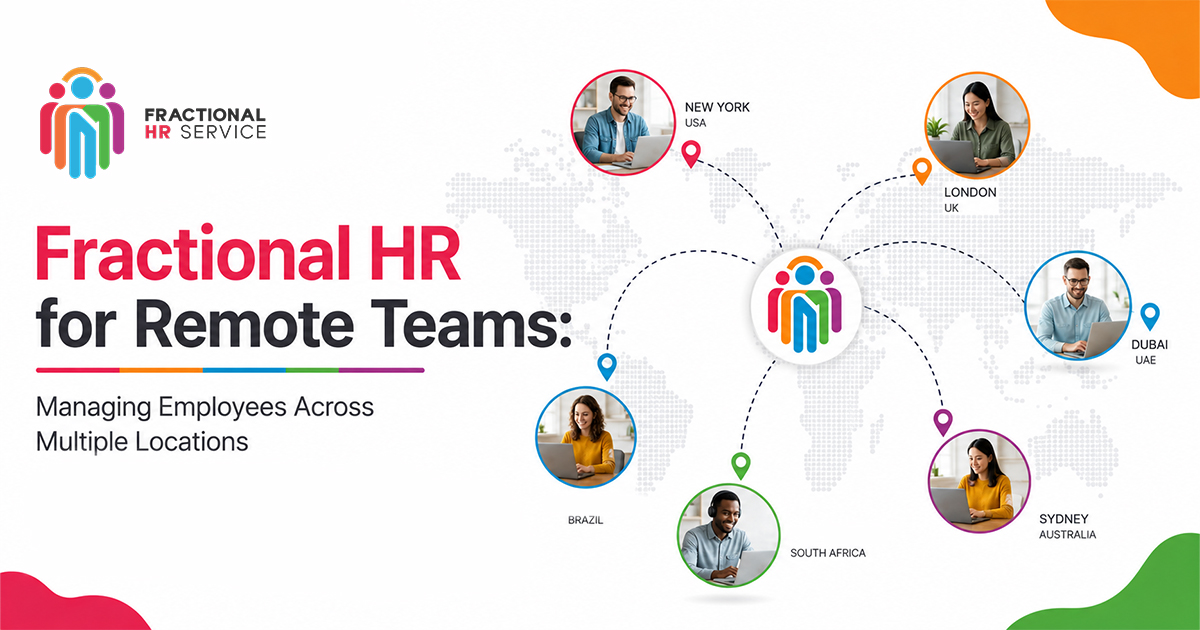
The way businesses hire, manage, and support their employees has changed with remote work. Today, there are several businesses that have staff in various cities, countries, or even in different time zones.
Flexible working and access to a broader talent pool are great, but so are new HR challenges. Whether it’s onboarding, performance management, compliance, or employee engagement, handling a remote team demands a systematic and strategic approach to HR.
This is where fractional HR for remote teams can come in handy. Readiness to have access to professionals who can give businesses strategic and operational support and reduce the need for building a full-time HR team.
We will discuss how fractional HR can help businesses to work with employees in various locations and enhance efficiency, compliance, and employee experience (Source: SHRM)
Why Do Remote Teams Need a Different HR Approach?
Managing remote employees requires more than just virtual meetings and messaging platforms.
Inconsistencies in HR processes can lead to businesses experiencing a lack of clarity in onboarding, communication failures, performance problems, and decreased employee engagement.
With a well-crafted HR strategy, remote teams remain connected, aligned and productive, no matter where they are working from.
What Is Fractional HR for Remote Teams?
Fractional HR provides businesses with experienced HR professionals on a flexible basis without the cost of hiring a full-time HR manager.
Companies can leverage HR experts for their strategic and operational HR needs when needed, rather than dealing with an in-house HR team.
This solution is especially suitable for startups and SMEs with remote or hybrid teams, offering professional HR guidance without the high costs (Source: Thepeoplestack).
Why Are More Businesses Choosing Fractional HR?
As remote and hybrid work become more common, businesses are looking for flexible HR solutions that can grow with them.
It’s not always feasible for small businesses, particularly startups and SMEs, to ensure that they have a dedicated HR manager on their staff.
By leveraging fractional HR, businesses gain access to experts when it matters most, enhancing their HR capabilities without the burden of hiring a full-time HR professional or manager (Source:
What Challenges Do Distributed Teams Face?
Managing employees across multiple locations comes with unique HR challenges.
Some of the most common include:
- Remote onboarding
- Communication gaps
- Performance management
- Employee engagement
- HR compliance
- Time zone coordination
- Maintaining company culture
Without structured HR support, these challenges can impact employee satisfaction, collaboration, and overall business performance.
How Does Fractional HR Support Remote Workforce Management?
Fractional HR helps businesses build consistent HR processes for employees working across different locations.
An experienced HR partner can support:
- Remote recruitment
- Digital onboarding
- HR policy development
- Performance management
- Employee engagement initiatives
- HR documentation
- Compliance support
Whether your employees work from different cities or countries, a fractional HR professional helps ensure every team member receives the same level of support, communication, and guidance.
This structured approach improves collaboration, strengthens employee experience, and makes remote workforce management more efficient.
What Are the Benefits of Virtual HR Support?
Virtual HR support allows businesses to manage remote employees efficiently without increasing overhead costs.
Some of the key benefits include:
- Lower HR costs
- Flexible HR support
- Access to experienced HR professionals
- Consistent HR processes
- Better employee engagement
- Improved compliance
- Scalable HR services
For startups and SMEs, virtual HR support provides enterprise-level HR expertise without the long-term commitment of hiring a full-time HR team.
Is Fractional HR the Right Choice for Your Business?
Fractional HR is an ideal solution for businesses that need professional HR support without expanding their internal team.
It works particularly well for:
- Startups
- Small and medium-sized businesses
- Hybrid workplaces
- Fully remote teams
- Businesses expanding across multiple locations
If your business requires expert guidance for recruitment, employee management, compliance, or workforce planning, fractional HR offers a flexible and scalable solution.
When choosing a fractional HR partner, look for industry experience, a flexible service model, and the ability to adapt HR strategies as your business grows. The right partner should understand your goals and provide practical HR solutions that support long-term success (Source: FHRS).
Best Practices for Managing Remote Teams Across Multiple Locations
Businesses should also establish clear HR policies, maintain regular communication, set measurable performance expectations, and invest in employee engagement initiatives.
Providing consistent onboarding experiences, encouraging feedback, and ensuring compliance across different locations helps create a connected workforce, regardless of where employees are based.
These practices become even more effective when supported by experienced HR professionals who understand the unique challenges of managing distributed teams.
Partner with FHRS for Smarter Remote Workforce Management
Fractional HR Service (FHRS) supports startups, SMEs, and expanding businesses to develop efficient HR strategies for remote teams. We offer flexible support for businesses with regard to recruitment, onboarding, compliance, performance management, and employee engagement, among other areas, and have experienced HR professionals on hand to help.
Whether you have a remote team or you’re growing across various locations, FHRS can assist you in creating scalable HR processes that will help your business to grow sustainably.
Contact FHRS today to discover how our fractional HR solutions can help your remote team stay connected, compliant, and productive.
Conclusion
Digital communication tools aren’t enough for managing employees across several locations. It demands standardized HR practices, a robust employee support system and a strategy to ensure team engagement and adherence.
By leveraging fractional HR for remote teams, businesses can access seasoned HR experts who can optimize HR processes, enhance employee satisfaction, and contribute to business expansion without the overhead of a dedicated HR team.
Flexible HR solutions have become an integral component of fostering productive and connected remote and hybrid teams that are evolving.


No comments yet